

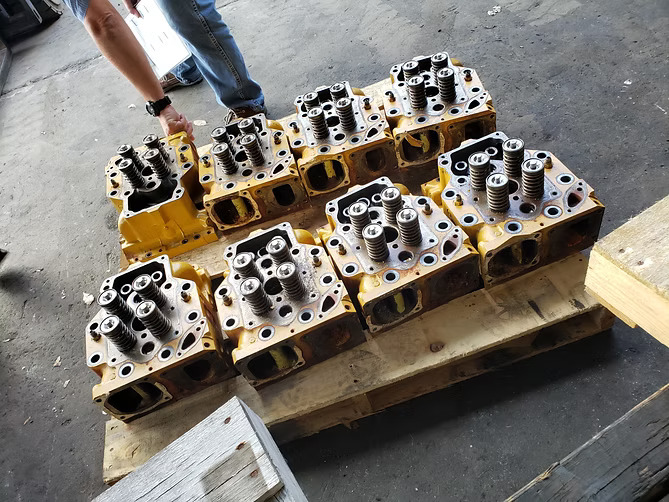
Diesel cylinder bore wear is one of the primary causes of compression loss, oil consumption, and premature engine failure in heavy duty engines. In industrial, marine, and fleet applications, even small deviations in bore geometry can reduce efficiency and shorten engine life.
Cylinder walls must remain within strict tolerances to maintain ring sealing, oil control, and combustion stability. When wear exceeds specification, accurate cylinder bore wear measurement and proper machining determine whether the engine delivers reliable service or fails shortly after rebuild.
This guide explains diesel cylinder bore wear, how it is measured, acceptable tolerances, and when machining solutions such as diesel engine cylinder honing or sleeving are required.
What Causes Diesel Cylinder Bore Wear in Heavy-Duty Engines
Heavy duty diesel engines operate under constant mechanical and thermal stress. Over time, several factors contribute to bore deterioration.
Combustion Pressure and Continuous Load Stress
High combustion pressure increases friction between piston rings and cylinder walls. Engines operating under continuous load experience accelerated wear, especially in high hour equipment.
Poor Lubrication and Oil Contamination
Insufficient lubrication allows metal to contact metal. Contaminants such as dirt, fuel dilution, or carbon particles create abrasive wear inside the cylinder.
Common lubrication-related causes include:
- Low oil pressure
- Delayed oil changes
- Incorrect oil viscosity
- Restricted oil passages
Overheating and Thermal Distortion
Repeated overheating cycles expand cylinder walls unevenly. This leads to distortion, taper, and out-of-round conditions that compromise ring sealing.
Piston Ring Failure and Abrasive Wear
Worn or damaged rings can score the cylinder wall, increasing oil consumption and accelerating wear.
Symptoms of Diesel Cylinder Bore Wear Before Major Failure
Early identification prevents catastrophic damage and unnecessary downtime.
Excessive Oil Consumption
Worn cylinders allow oil to pass into the combustion chamber, increasing oil usage.
Blow-By and Loss of Compression
Increased crankcase pressure and reduced compression indicate poor ring sealing.
Blue or Gray Exhaust Smoke
Oil entering the combustion chamber produces visible exhaust smoke under load.
Reduced Power and Increased Fuel Consumption
Loss of cylinder sealing forces the engine to work harder, reducing efficiency.
If these symptoms are present, professional inspection is recommended.
Cylinder Bore Wear Measurement: Tools, Methods and Accuracy Standards
Accurate cylinder bore wear measurement determines whether machining is required and which repair method is appropriate.
Using Dial Bore Gauges and Micrometers
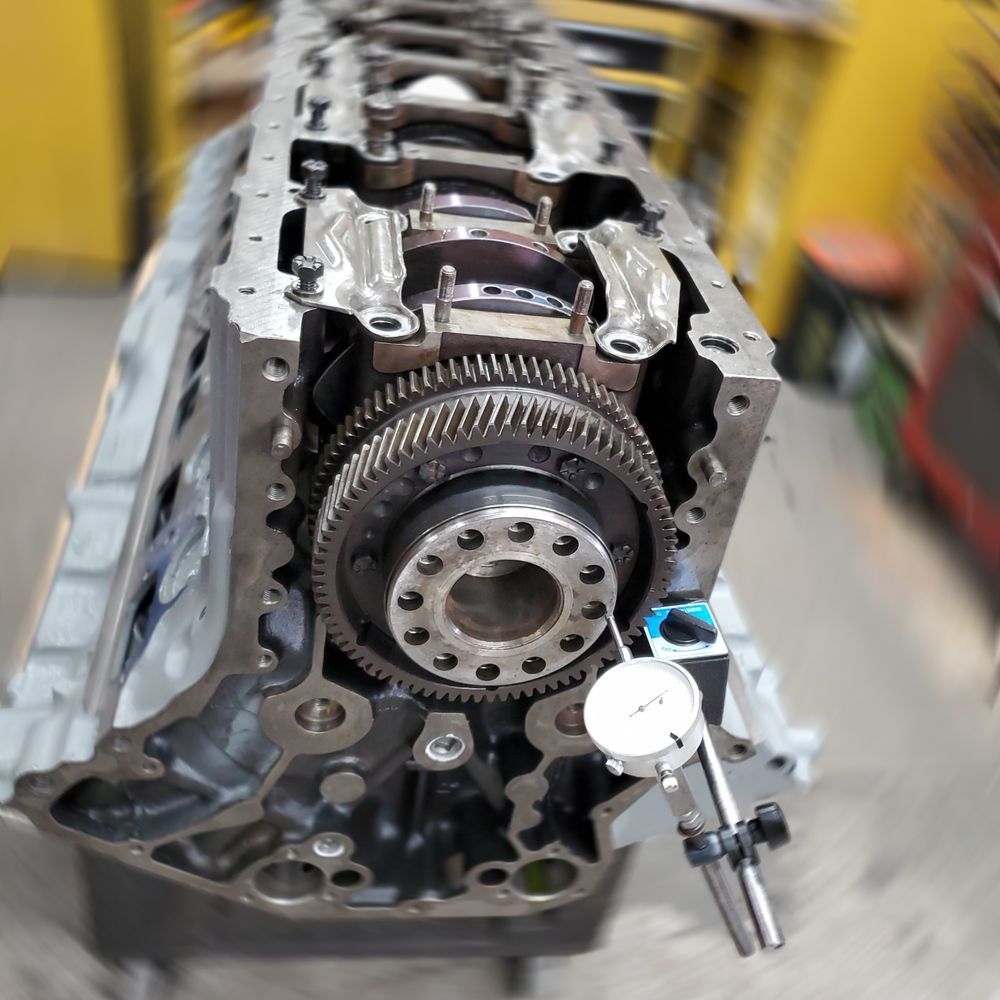
Professional machinists use calibrated dial bore gauges to measure internal diameter and micrometers to verify reference dimensions. Measurement must be precise to thousandths of an inch.
Measuring Taper and Out-of-Round Conditions
Bores are measured at multiple heights and clock positions to detect:
- Taper along the cylinder length
- Out-of-round distortion
Both conditions must remain within manufacturer specifications.
Comparing Measurements to OEM Tolerance Limits
Each diesel engine manufacturer defines maximum allowable wear limits. If bore diameter, taper, or roundness exceeds specification, corrective machining is required.
Why Measurement Accuracy Determines Rebuild Success
Incorrect measurement can lead to improper piston selection, incorrect oil clearance, and premature failure. Precision inspection protects rebuild quality.
Diesel Cylinder Bore Tolerances and Wear Limits
Understanding wear limits is critical for determining whether honing, boring, or sleeving is required.
Acceptable Bore Diameter Variation
Minor wear within serviceable limits may be corrected with diesel engine cylinder honing.
Taper and Out-of-Round Limits
Excessive taper prevents uniform ring contact. Out-of-round geometry causes uneven loading and accelerated wear.
Surface Finish Requirements for Ring Sealing
Surface texture affects oil retention and ring seating. Incorrect finish can cause glazing, poor break-in, and oil control problems.
When a Cylinder Is Beyond Serviceable Limits
A bore may require boring or sleeving when:
- Wear exceeds oversize limits
- Deep scoring is present
- Structural damage compromises integrity
Professional evaluation ensures the correct repair path.
When wear exceeds allowable oversize limits or structural distortion is detected, a complete engine block machining process including sleeving, resurfacing, and align boring may be required to restore full structural accuracy and long term reliability.
Diesel Engine Cylinder Honing: Restoring Geometry and Surface Finish
Diesel engine cylinder honing corrects minor wear and restores proper surface finish when damage is within limits.
Purpose of Diesel Engine Cylinder Honing
Honing restores:
- Roundness
- Correct surface texture
- Proper crosshatch pattern
It removes minimal material while correcting geometry.
Crosshatch Patterns and Oil Retention
The crosshatch pattern created during honing retains lubrication and supports proper ring seating.
Honing vs Boring: When Each Is Required
Honing is appropriate when wear is minor and within tolerance. Boring is required when:
- Diameter exceeds limits
- Taper is excessive
- Damage is too deep for surface correction
Common Honing Mistakes That Cause Early Failure
Improper honing may result in:
- Incorrect piston-to-wall clearance
- Poor surface finish
- Uneven geometry
Precision equipment and experienced machinists are essential.
When Sleeving Is Required Instead of Honing
Sleeving restores cylinders that cannot be corrected through machining alone. In severe cases involving deep scoring or cracks, engine block sleeving as a permanent repair restores cylinder integrity when machining alone is insufficient.
Severe Cylinder Scoring and Deep Damage
Deep gouges weaken the cylinder wall and require structural correction.
Structural Cracks and Coolant Intrusion
Cracks in the cylinder compromise sealing and cooling performance.
Restoring Oversized Bores to Standard Specification
Sleeving allows the block to return to standard bore size when oversize limits are exceeded.
Long-Term Reliability of Proper Sleeve Installation
Correct sleeve installation includes:
- Accurate bore preparation
- Proper interference fit
- Final honing to specification
When performed correctly, sleeving provides durable and reliable repair.
Common Machining Errors That Lead to Repeat Cylinder Failure
Improper machining is a common cause of repeat rebuilds.
Incorrect Piston-to-Wall Clearance
Too tight clearance leads to scuffing. Too loose clearance increases oil consumption and blow-by.
Improper Surface Finish
Rough finishes accelerate wear. Overly smooth finishes prevent proper ring seating.
Failure to Correct Bore Geometry
Ignoring taper or distortion results in uneven loading and premature wear.
Contamination After Machining
Residual debris left inside oil passages can destroy bearings and rings during initial startup.
Strict cleaning and inspection protocols are critical.
Why Precision Diesel Cylinder Inspection Matters in Miami’s Heavy-Duty Market
Industrial and marine diesel engines operating in Miami face high temperature and continuous load conditions. Precision machining directly impacts uptime and operational cost.
Motor Service Group is a diesel engine machine shop in Miami specializing in precision inspection, measurement, and machining of critical engine components. Accurate cylinder bore wear measurement and documented tolerances ensure correct repair decisions.
Frequently Asked Questions About Diesel Cylinder Bore Wear
Q. How do I know if my diesel cylinder bore is worn beyond limits?
Only accurate cylinder bore wear measurement using calibrated tools and comparison to manufacturer specifications can determine whether the bore is serviceable.
Q. Can diesel engine cylinder honing fix all wear conditions?
No. Honing corrects minor wear and surface issues. Severe wear, deep scoring, or structural damage requires boring or sleeving.
Q. What happens if bore taper is not corrected?
Uncorrected taper leads to uneven ring sealing, compression loss, oil consumption, and accelerated component wear.
Q. How precise must cylinder bore wear measurement be?
Measurements must be accurate to thousandths of an inch to ensure proper clearance and long term durability.
Q. When is sleeving better than boring?
Sleeving is required when wear exceeds oversize limits or when structural damage is present in the cylinder wall.
Restore Diesel Engine Reliability with Precision Machining
Diesel cylinder bore wear directly affects compression, oil control, and engine durability. Accurate diagnosis determines whether diesel engine cylinder honing, boring, or sleeving is required.
Motor Service Group provides precision diesel inspection and machining services in Miami focused on tolerance control, surface finish accuracy, and documented quality standards.
If your engine shows signs of cylinder bore wear, schedule a professional inspection with Motor Service Group. Accurate measurement and precision machining are the foundation of long term diesel engine reliability.